
Skip to content

916 521-9040

Tree Removal & Trimming Auburn CA

Japanese Maple Trees

Free Estimate

Boutique Japanese Maple Care & Aesthetic Pruning

Honoring the Artistry of Northern California’s Most Iconic Specimen Trees

Japanese Maples are the focal points of the Placer County landscape, valued for their intricate foliage and sculptural silhouettes. However, our harsh Sacramento Valley sun and localized winds require a more sophisticated level of care than standard shade trees. At Lyons Tree Service, we move beyond basic maintenance to provide curated aesthetic pruning. Our mission is to balance the health of your maple with its visual impact, ensuring it remains a breathtaking centerpiece for decades to come.

Specialized Care for Local Specimen Types

Laceleaf & Pendulous (Weeping) Types
Most common in the manicured landscapes of Granite Bay and Roseville, these "dissectum" varieties require a horizontal layering approach. We prevent the "beehive" look by creating distinct tiers of foliage that flow like water.

Upright & Broadleaf Specimen
Found in the more expansive properties of Loomis and Auburn, these trees—like the Bloodgood or Oshio Beni—require height management. We use "lateral reduction" to keep them within their footprint without ruining their natural upright grace.
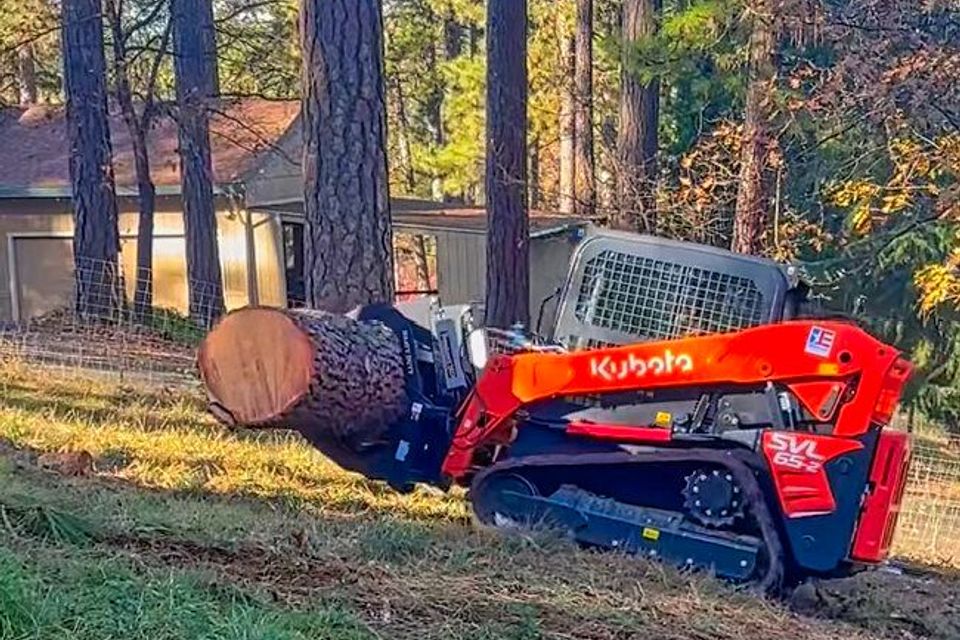
Large-scale tree removal in Placer County featuring ground protection mats and precision cutting to ensure zero impact on the homeowner's landscape and structures.

Professional Japanese Maple Removal Services

Because Japanese Maples are often integrated into complex garden designs—surrounded by delicate perennials, custom stonework, or water features—removing them requires more than just a saw. We specialize in low-impact removals that prioritize the safety of your existing landscape.

When to Consider Removing Your Japanese Maple
  • Irreversible Leaf Scorch & Decline: In the extreme heat of the Roseville and Rocklin plains, some maples (especially non-heat-tolerant cultivars) reach a point of "chronic decline" where they can no longer support themselves.
  • Verticillium Wilt: This soil-borne fungus is common in Northern California. Once it infects the vascular system of a maple, the tree often dies back limb by limb. Removing the tree is necessary to prevent the fungus from spreading through the soil to other susceptible plants.
  • Crowding & Competition: Maples are often planted too close to home foundations or under the heavy canopies of larger Oaks. If a tree has become misshapen or stunted due to poor placement, removal may be the best option for the overall health of your garden.
  • Structural Splitting: Multi-trunk maples are prone to splitting at the "crotch" during high winds or heavy snow in the Auburn foothills. If the main trunk is compromised, the tree may become a hazard.

Specialized "Low-Impact" Removal
Japanese Maples are rarely in open spaces. They are tucked into corners, over patios, and near pools.
  • Hand-Dismantling: We often skip heavy machinery in favor of hand-cutting and lowering branches individually to protect your understory plants.
  • Pond & Hardscape Protection: If your tree is over a koi pond or expensive flagstone, we use specialized padding and debris-capture systems to ensure not a single branch touches your property.

Precision Stump Grinding for Maples
The root systems of Japanese Maples are fibrous and shallow, but they can be surprisingly wide.
Garden-Safe Grinding: Our portable stump grinders can fit through standard backyard gates and operate without tearing up your turf.
Ready for Replanting: We grind the root ball thoroughly so you can replant a more heat-tolerant variety or install a different landscape feature in the same footprint.
3

Boutique Japanese Maple Care & Aesthetic Pruning

Unlike large shade trees, Japanese Maples should almost never be pruned with power tools. We treat every tree with "bonsai-level" attention to detail.

Aesthetic Hand-Pruning & Layering
We focus on "lacing out" the canopy—a technique that creates beautiful, horizontal layers of foliage.
  • Light Penetration: Allowing just enough light to reach the interior without scorching the bark.
  • Airflow Improvement: Reducing the risk of fungal diseases common in the humid pockets of Placer County gardens.
  • Structural Integrity: Removing crossing or competing branches to highlight the tree’s unique, sculptural form.

Sunscald & Leaf Scorch Prevention
Northern California's 100°C+ days can be deadly for maples. We provide:
  • Strategic Thinning: Ensuring the outer "shell" of leaves protects the sensitive inner bark from the afternoon sun.
  • Mulching & Root Care: Protecting the shallow root systems common to maples to improve water retention during drought.

Corrective Shaping for Weeping Varieties
"Dissectum" (weeping) varieties often become overgrown and bird-nest-like in the center. We meticulously clean out the dead interior wood and "skirt" the bottom to keep the delicate foliage off the ground and away from pests.

Why Choose Lyons Tree Service for Your Japanese Maples?

The Artisans of Northern California Maple Care
A Japanese Maple is a centerpiece, often the most expensive and sentimental plant in a Placer County landscape. You wouldn't trust a high-end painting to a house painter, and you shouldn't trust a Japanese Maple to a standard trimming crew. At Lyons Tree Service, we treat your maples with the precision and respect they deserve.

1. Master-Level "Hand-Pruning" Only
We leave the chainsaws and power shears in the truck. Japanese Maples require the surgical precision of hand-bypass pruners. Our technicians are trained in aesthetic lacing, a method that involves making thousands of small, intentional cuts to create a transparent, airy canopy that looks natural—never "hacked."

2. We Understand the "Winter Silhouette"
A truly well-pruned maple is just as beautiful in the winter as it is in the summer. We prune with the "bones" of the tree in mind. By identifying the primary structural branches and removing the "congested" interior growth, we ensure your tree provides a stunning architectural focal point even after the leaves have fallen.

3. Climate-Specific Health Management
Roseville and Rocklin summers are incredibly harsh on Acer palmatum. We understand the local micro-climates. We know how to prune to provide "self-shading" for the sensitive bark and how to treat the soil to prevent the dreaded Leaf Scorch and Verticillium Wilt that plague so many Northern California maples.

4. Preservation of Your "Understory"
Japanese Maples are almost always surrounded by delicate garden features—ferns, hostas, moss, or expensive landscape lighting. We use a "minimal footprint" approach. We don't use heavy lifts or ladders that crush your flowers; our technicians are experts at working within tight garden spaces without leaving a trace.

5. Corrective Restoration of Overgrown Trees
If your maple has been neglected or poorly pruned in the past, don't give up on it. We specialize in restoration pruning. We can carefully "thin out" a tree that has become a dense, tangled ball of branches, slowly bringing back the layered, elegant look that the original grower intended.

Frequently Asked Questions About Japanese Maple Care

When is the best time to prune my Japanese Maple?
For major structural changes or "lacing out" the canopy, winter dormancy (January and February) is best. However, light aesthetic thinning—such as removing "water sprouts" or dead interior twigs—is ideally done in late spring or early summer. This helps the tree heal quickly and allows us to see how the foliage drapes before the heat of July sets in.

Why are the edges of my maple leaves turning brown and curling?
In Northern California, this is usually Leaf Scorch. It occurs when our dry North winds and triple-digit heat pull moisture out of the leaves faster than the roots can replace it. While it looks alarming, it is rarely fatal. We can help by pruning to provide better "internal shade" and recommending specialized mulching techniques to keep the root zone cool.

Can you prune a Japanese Maple to keep it from hitting my house?
Yes, but we use Lateral Reduction rather than "topping." We identify the branches growing toward your structure and prune them back to a parent limb. This redirects growth away from the house while maintaining the tree's soft, graceful silhouette. Topping a maple creates "knobby" growth and ruinous aesthetics.

How do I know if my maple has Verticillium Wilt?
Verticillium Wilt is a soil-borne fungus common in Placer County. The most obvious sign is "flagging"—where one specific branch suddenly wilts and dies while the rest of the tree looks healthy. If you see dark, olive-colored streaking under the bark of a dead limb, contact us immediately for a health assessment to save the rest of the tree.

Should I be worried about "suckers" growing at the base of the trunk?
Yes. Most Japanese Maples are grafted. If you see vigorous, green-leaved shoots growing from the very bottom of a red-leaved tree, those are "suckers" from the rootstock. They will eventually outgrow and "choke out" the beautiful ornamental part of your tree. we remove these carefully to ensure the grafted variety remains the dominant feature.

My "Weeping" maple looks like a messy bush. Can it be fixed?
Absolutely. Weaping (Dissectum) varieties often become congested with dead wood and "bird-nesting" in the center. We perform a detailed clean-out, removing the hidden dead wood and thinning the layers. This creates the "waterfall" effect where you can see the beautiful branch structure beneath the leaves.

Contact Us Today

Give us a call 916 521-9040 or send us a message using the form below.